
](https://cnsssheet.com/wp-content/uploads/2025/08/Stainless-steel-coil-10.jpg)
You are looking at a stainless steel coil spec sheet. It says "annealed and pickled." You know these are heat treatment and acid cleaning steps. But why are they needed?
Annealing and pickling are essential steps in stainless steel coil production. Annealing softens the steel and restores corrosion resistance after cold working; a clear explanation of the role of annealing in stainless steel is available in general stainless‑steel‑finish guides such as those from Ulbrich’s stainless steel surface finishes overview. Pickling removes oxide scale (heat tint) from the surface, leaving a clean, passive, corrosion‑resistant finish. Most stainless steel coils are supplied in the annealed and pickled condition (No.1 finish for hot rolled, 2B for cold rolled after pickling); you can see a comparison of common stainless steel finishes, including 1D, 2D, and 2B, on Fractory’s stainless steel finishes page.
](https://cnsssheet.com/wp-content/uploads/2025/08/Stainless-steel-coil-1.jpg)
I have visited mills and seen the annealing and pickling lines. A hot rolled coil comes out of annealing a dull gray color. After pickling, it is clean and silver. Let me walk you through these critical processes.
What is the difference between pickling and annealing?
Annealing is a heat treatment process that softens the steel and restores corrosion resistance; a concise explanation of annealing in stainless steel can be found in general stainless‑steel‑finish guides such as Ulbrich’s stainless steel surface finishes overview. Pickling is an acid cleaning process that removes oxide scale from the surface; typical pickling practice for stainless steel is described in technical references such as Fractory’s stainless steel finishes and pickling explanation.
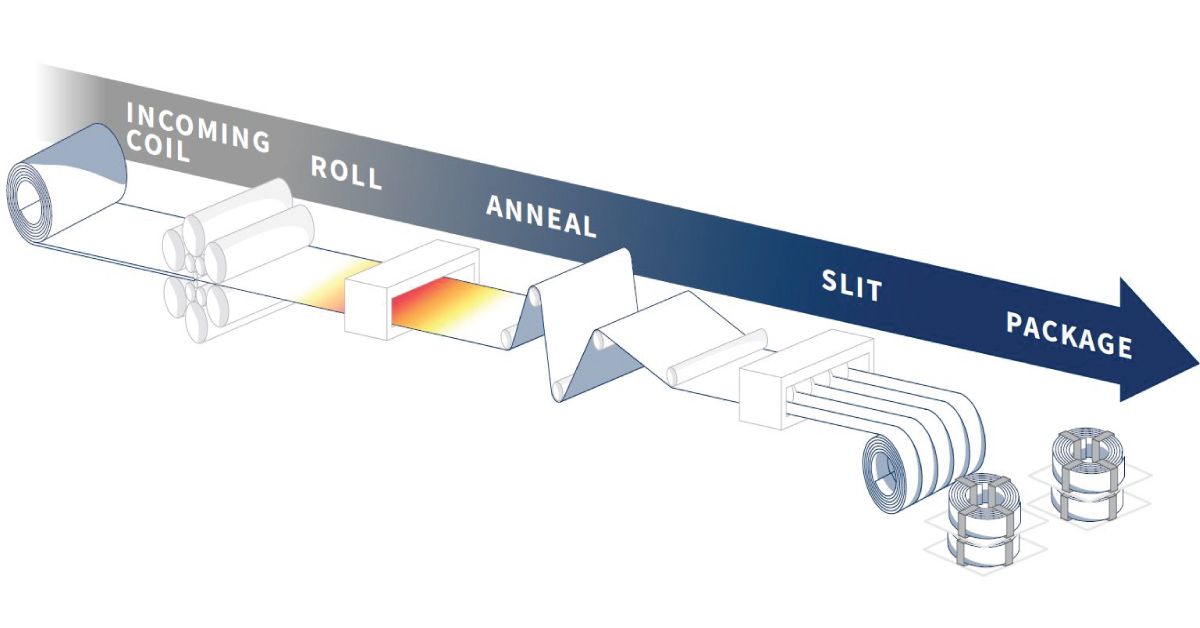
Annealing uses heat (1,000–1,100°C) in a furnace under controlled atmosphere. Pickling uses acid (nitric‑hydrofluoric acid mixture, HNO₃ + HF) at room temperature or slightly heated; more details on common pickling chemistry and temperatures are given in manufacturing‑oriented stainless steel process guides. Annealing changes the internal microstructure of the steel. Pickling only affects the surface. Both are needed: annealing first to soften and prepare the steel, then pickling to clean the surface.
](https://cnsssheet.com/wp-content/uploads/2025/08/Stainless-steel-coil-8-1.jpg)
Annealing vs Pickling Comparison
Let me compare these two processes.
Annealing
| Property | Description |
|---|---|
| Process | Heat treatment in furnace detailed annealing process description |
| Temperature | 1,000–1,100°C (1,800–2,000°F) |
| Atmosphere | Controlled (air, hydrogen, or inert gas) |
| What it does | Softens steel, restores corrosion resistance |
| Changes internal structure | Yes |
| Removes scale? | No |
Pickling
| Property | Description |
|---|---|
| Process | Acid bath immersion; an overview of pickling lines is given here |
| Temperature | Room to 60°C (140°F) |
| Acid | Nitric‑hydrofluoric (HNO₃ + HF) |
| What it does | Removes oxide scale (heat tint) |
| Changes internal structure | No |
| Removes scale? | Yes |
Why Both are Needed
| Step | Purpose |
|---|---|
| Annealing | Soften for forming, restore corrosion resistance; explained in stainless steel finishing guides |
| Pickling | Remove scale for clean, passive surface; see pickling and surface‑finish reference |
My Experience
In a mill, annealing turns the steel red‑hot. After pickling, the same coil is clean and silver, as illustrated in typical stainless‑steel annealing‑and‑pickling‑line diagrams such as those from Andritz’s hot annealing and pickling line case studies.
What is the pickling process for stainless steel?
The pickling process for stainless steel involves immersing the steel in an acid bath (typically a nitric‑hydrofluoric acid mixture) to remove oxide scale, heat tint, and surface contaminants. The result is a clean, passive, corrosion‑resistant surface. An overview of stainless steel pickling and its role in surface finishing is available in Fractory’s stainless steel finishes guide.
The process: steel is immersed in pickling acid at room temperature to 60°C for 5–30 minutes, depending on scale thickness. After pickling, the steel is rinsed with water to remove acid residue. For coils, pickling is done continuously in a pickling line, as described in technical references on annealing‑and‑pickling lines. Pickling can be performed on hot rolled coils (No.1 finish) or after welding to remove heat tint, which is commonly mentioned in stainless steel fabrication guides.
](https://cnsssheet.com/wp-content/uploads/2025/08/Stainless-steel-coil-2-1.jpg)
Pickling Process Steps
Let me explain the pickling process step by step.
Pickling Steps
| Step | Description | Time |
|---|---|---|
| 1 | Pre‑rinse | Remove loose scale, dirt |
| 2 | Acid immersion | Dissolve oxide scale; acid pickling steps are described in stainless steel surface treatment references |
| 3 | Rinse | Remove acid residue |
| 4 | Neutralize | Remove residual acid |
| 5 | Final rinse | Clean surface |
| 6 | Dry | Prepare for next step |
Pickling Acid Composition
| Acid | Concentration | Function |
|---|---|---|
| Nitric acid (HNO₃) | 10–20% | Oxidizing agent |
| Hydrofluoric acid (HF) | 1–5% | Scale dissolution |
Pickling Times
| Scale Type | Time (minutes) |
|---|---|
| Light scale (cold rolled) | 5–10 |
| Heavy scale (hot rolled) | 15–30 |
| Weld heat tint | 10–20 |
Pickling Results
| Before Pickling | After Pickling |
|---|---|
| Dull, gray, scale present | Bright, silver, clean |
| Uneven surface | Uniform appearance |
| Reduced corrosion resistance | Restored passive layer; the role of passivity in stainless steel is covered in general stainless steel corrosion resistance guides |
My Experience
After welding stainless steel pipe, the heat tint (blue/brown discoloration) must be removed by pickling or mechanical polishing to restore corrosion resistance, as recommended in stainless steel fabrication and surface‑finish resources.
What is the process of annealing stainless steel?
The annealing process for stainless steel (solution annealing) involves heating the steel to 1,010–1,120°C (1,850–2,050°F) to dissolve carbides, then rapidly cooling (water quenching) to prevent carbides from reforming. This softens the steel and restores corrosion resistance. A clear explanation of solution annealing and its role in stainless steel metallurgy is given in general stainless steel finishing and metallurgy guides.
For austenitic stainless steel (304, 316), annealing is called "solution annealing." The steel is heated until carbides dissolve, then quenched rapidly. This prevents "sensitization" (carbide precipitation) that reduces corrosion resistance; sensitization and its effect on corrosion are described in stainless steel corrosion and metallurgy references. For coils, annealing is done continuously in a line with a furnace and quench tank, as illustrated in annealing‑and‑pickling line descriptions.
](https://cnsssheet.com/wp-content/uploads/2025/08/Stainless-steel-coil-5-1.jpg)
Annealing Process Steps
Let me explain the annealing process step by step.
Annealing Steps
| Step | Temperature | Purpose | |
|---|---|---|---|
| 1 | Heat up | 1,010–1,120°C | Dissolve carbides |
| 2 | Soak | 1,010–1,120°C | Homogenize structure |
| 3 | Quench | Rapid (water) | Prevent carbide precipitation |
Annealing Parameters by Grade
| Grade | Annealing Temperature | Cooling |
|---|---|---|
| 304 | 1,010–1,070°C | Water quench |
| 304L | 1,010–1,070°C | Water quench |
| 316 | 1,010–1,120°C | Water quench |
| 316L | 1,010–1,120°C | Water quench |
| 430 | 760–815°C | Air cool |
Why Annealing is Needed
- After cold working (rolling, drawing); cold working and annealing are explained in stainless steel processing guides
- After welding (to restore corrosion resistance); welding‑related sensitization and annealing are covered in stainless steel fabrication references
- To soften steel for further forming
- To prevent sensitization (L grades help)
Results of Annealing
| Before Annealing | After Annealing |
|---|---|
| Hard, work hardened | Soft, ductile |
| Reduced corrosion resistance | Restored corrosion resistance |
| Carbides present (non‑L grades) | Carbides dissolved |
My Experience
Cold rolled stainless steel is hard and strong. After annealing, it becomes soft and easy to form, as shown in typical stainless steel manufacturing‑flow diagrams such as those from Ulbrich’s process illustrations.
Can you pickle in stainless steel?
No, you cannot "pickle in stainless steel." Pickling is a process performed on stainless steel, not in stainless steel. The correct term is "pickling of stainless steel." Metal pickling is described as a chemical cleaning process that removes oxides and scale from metal surfaces on Fractory’s pickling‑explanation page.
You may be confusing pickling (acid cleaning) with pickling (food preservation). In metallurgy, pickling is the acid cleaning of metal surfaces. You pickle stainless steel in an acid bath, as explained in general stainless‑steel pickling guides such as Wermac’s pickling and passivation overview. You do not pickle food in stainless steel; stainless steel is a container material, not the medium for food‑preservation pickling.
](https://cnsssheet.com/wp-content/uploads/2025/08/Stainless-steel-coil-9-1.jpg)
Pickling Terminology Clarification
Let me clarify the meaning of pickling in metallurgy.
Pickling in Metallurgy
| Term | Meaning |
|---|---|
| Pickling | Acid cleaning of metal surfaces; for stainless steel, see stainless‑steel pickling guidance |
| Pickle liquor | The acid solution (HNO₃ + HF) used in metal pickling; explained in metal pickling‑liquor references |
| Pickling line | Continuous acid bath for coils; described in annealing‑and‑pickling line and process pages |
Pickling in Food
| Term | Meaning |
|---|---|
| Pickling | Food preservation in brine or vinegar; this use is explained in general pickling‑and‑fermentation guides such as MFG Shop’s pickling overview |
| Pickle | The preserved food |
Correct Usage for Stainless Steel
- "Pickling of stainless steel" (correct); see stainless‑steel pickling‑definition pages
- "Pickle stainless steel" (correct as verb; for example, "We pickle stainless steel after welding.")
- "Pickle in stainless steel" (incorrect – you don’t preserve food in it; stainless steel is the vessel, not the process)
Example Sentences
- Correct: "The stainless steel coil is pickled to remove scale." See process‑description pages.
- Correct: "We need to pickle the weld area to restore corrosion resistance." This is covered in stainless‑steel weld‑scale pickling guides.
- Incorrect: "You can pickle in stainless steel."
My Experience
A customer asked if they could "pickle in stainless steel." I explained that pickling is the acid cleaning process applied to stainless steel, not a food‑preservation use, as described in general stainless‑steel pickling references such as INOX Passivation’s pickling explanation.
Conclusion
Annealing is a heat treatment that softens steel and restores corrosion resistance; this role of annealing in stainless steel is explained in general stainless‑steel‑processing guides such as ANOX Passivation’s annealing and pickling overview. Pickling is an acid cleaning process that removes oxide scale, as described in metal‑pickling explanations. Both are essential for stainless steel coil production, and their sequence—annealing first, then pickling—is outlined in stainless steel coil manufacturing and annealing‑pickling‑line references.


](https://cnsssheet.com/wp-content/uploads/2025/04/stainless-steel-bar-6.webp)

